
When talking about coxing, I have never met anyone (rowers, coaches, and coxswains combined) that don’t know the name Mary Whipple. She’s a legend and an incredible teacher. Even in her short Instagram stories or videos, I always learn a ton of new information about being an effective cox. When I found out that she was doing an online cox camp, I had to jump on it.
This post is not even close to covering everything I learned during the 4-day camp. Talking shop with Mary and other enthusiastic coxswains have fired me up and brought that special kind of joy (or “fun stress” as I call it) I only feel when coxing, and I hope you get a little dose of it too.
She did not waste a single minute during the camp and had Julian Venonsky as a guest speaker on the first day! We watched this exhilarating race where the U.S. men’s rowing team qualified its 8+ for the Olympics at the 2019 World Rowing Championships.
Julian talked about his rowing and coxing career and answered all the questions we had including mine about how much oppo research he does. He said, “not much.” There’s staff that does the research work, and he focuses on controlling what he can control.
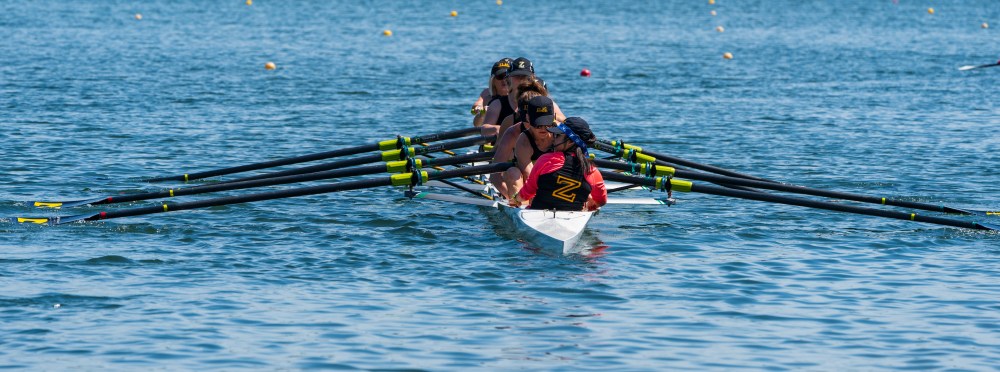
Boat feel is a skill that I just don’t have… yet. I hardly make set calls because I freaking can’t tell if the boat’s set or not. It was reassuring to hear from Mary that boat feel isn’t just about the feel. Coxswains need to listen. Okay, I can do that. I can listen. I am way better at listening for the right sound. The boat feel discussion was full of specifics, and I was grateful to learn the steps from Mary and ask questions. I know it took her a long time and countless practices to fine tune everything she shared.
She also connected us with an extraordinary resource: Lindsay Shoop! I am excited to do the Lindsay Shoop movements when I go out to cox because yes, sometimes I have to sit weirdly in a boat, and it messes up my posture and my senses. We started every morning during the camp with a series of movements that was especially beneficial for the coxswains. Gotta get that core core core power. “You’re pretty much planking the whole practice!”
When I switched clubs and moved from a wet launching club to a dock launching club, my confidence in coxing (not just docking) shattered. You probably know the feeling when you managed an awesome practice and the rowers + coach are happy, but you ruin the whole day by effing up at the dock. Or at least you think you did… On the flip side, when I row in a coxed boat and the coxswain doesn’t dock correctly, it never bothers me. I completely understood what she meant when she told us that we didn’t have to be perfect but seamless in decision-making.
We watched a lot of docking videos from her previous summer camps when people went out on the water (ugh, jealous) and talked about different scenarios and strategies. As a homework assignment (How long has it been since I had homework?! It was kind of exciting.), we wrote our docking protocols at our own boathouses.
Okay, my lunch break is almost over, but I still have so much I want to share! In the next post, I will write about what we discussed re: racing and something that Mary had us do that I did not think I was going to benefit from… dun dun dun.
 Coxswain's Log