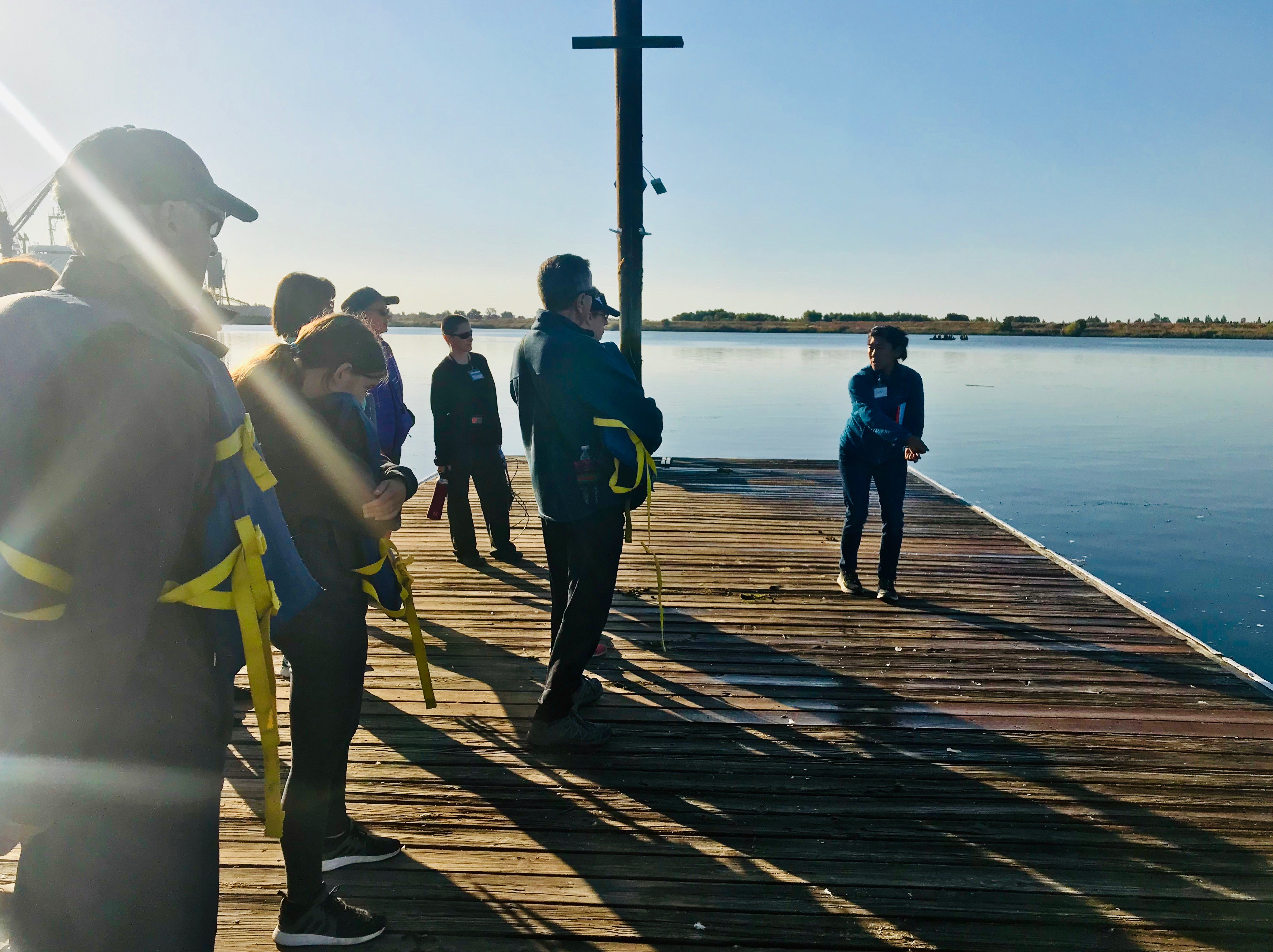
I led a session during my club’s coxswains clinic, and I typed up my outline with some additional information for anybody who wants some docking assistance. Let me know if you have other docking rules you live by!
- First of all, are you a rower-coxswain or a sometimes coxswain that only coxes when your name is drawn out of a hat or if you are late to practice as if coxing is a punishment?! It is totally understandable if your docking abilities are similar to a fifteen-year-old’s parallel parking skills. Just let the coach know before practice or before you come back to the dock so that he or she can be ready to help. This is not a fake it ’till you make it moment.
- It’s getting darker and darker, and it’s important to know the lights or other signs around your dock if you are coming back when the sun’s not yet up. My club has a few lights that I can use as guidance, but I also have to make sure not to mix them up and point incorrectly.
- Assess wind and waves. If you are not sure, stop the boat far enough away from the dock and figure it out before you approach the dock.
- Communicate with other boats’ coxswains or bow seats (blind boats) to decide who is going on which side of the dock if there are multiple options. One of the crews that I cox for has established docking orders that everyone knows about, but we are careful to communicate with other crews if we end up coming back around the same time.
- Have your rowers’ attention and talk to them. Our club’s coxswains either come in parallel to the dock or at a 15-degree angle, and it’s completely up to each coxswain. We have the long side and the short side of the dock, so I like giving my rowers updates so that they know what to expect.
- Slow down boat speed and use either the bow pair or stern pair as your last pair rowing. Sometimes I ask them to use only arms and body if I need strokes just to get a little bit closer.
- Understand that rudder doesn’t have much effect at this point and have your rowers hold or back to change your point.
- Make sure the boat doesn’t touch the dock. Even a little bump or scratch while docking adds up when it happens every practice. We have rubber protection on the dock, but I still have my rowers have 2-3 inches between the dock and the boat when we come in.
- Be efficient off the dock and remind the rowers about any conditions that you notice (Icy? Traffic to the boat house? Bow or stern first?).
 Coxswain's Log